Cuba
My Cuba research spans two interconnected projects: a historical study of gender and women's role in the 1950s insurrection that brought Castro to power, and an ongoing investigation of Cuba's largely overlooked experiences, understandings, and representations of the 1962 Cuban Missile Crisis. Drawing on extensive archival research in Cuban and international archives, this work examines how revolutionary identity, national martyrdom, and gender have shaped Cuban politics and international conflict from the insurrection to the Cold War.
Current Research Project
My current work repositions Cuba as an actor—rather than a mere staging ground—in the Cuban Missile Crisis. Drawing from Cuban, Soviet, American, and other international archives, I examine how concepts of masculinity, national martyrdom, and revolutionary identity shaped Cuba's diplomatic posture and decision-making during this near-nuclear confrontation. This project challenges conventional two-superpower narratives by inserting Cuban voices and perspectives into the historical record.
Book
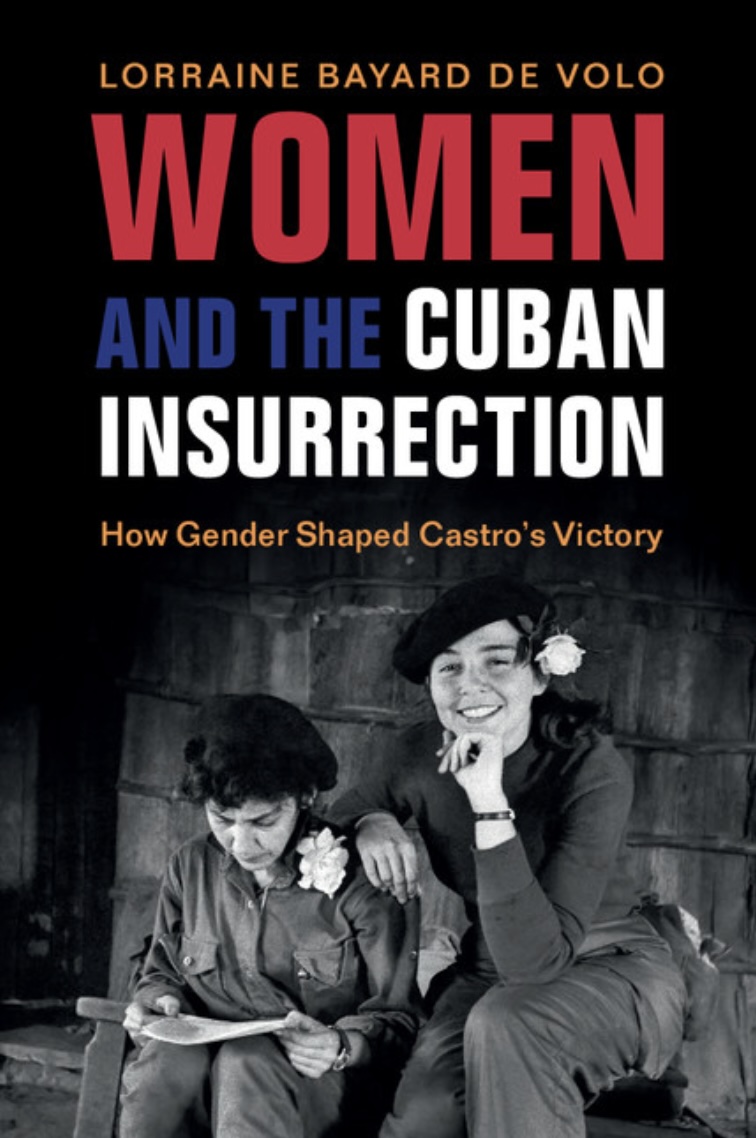
Women and the Cuban Insurrection: How Gender Shaped Castro's Victory
Cambridge University Press, 2018
In Women and the Cuban Insurrection: How Gender Shaped Castro’s Victory, I ask how Cuban rebels moved from a disastrous 1953 barracks attack, to prison and exile, to a near-suicidal return in 1956, and then to power just over two years later. The prevailing account emphasizes a small band of men who survived to build the guerrilla army that defeated Batista. A gender lens changes that story by widening the focus to include women and noncombatant men, and by examining the gendered logics through which rebels mobilized support, claimed authority, and fought the regime. The book brings the Cuban insurrection into feminist international relations, political sociology, and the literature on gender and war. Drawing on new archival material, it challenges both triumphal revolutionary narratives and scholarship that relies heavily on the official War Story promoted by the revolution in power. I argue that the insurrection was won not only through bullets and battlefield heroics, but also through logistics, organizing, propaganda, and the struggle for hearts and minds—forms of labor often performed by women and civilian men, and often missed in conventional accounts. The book makes three central claims. First, women’s participation reveals the prosaic labor that makes armed insurrection possible. Second, guerrilla warfare has been overstated at the expense of the rebels’ sustained war of ideas. Third, rebels tactically deployed gender in both military and ideological struggle, from emasculating enemy soldiers to countering Batista’s patriarchal authority with an alternative rebel masculinity. This analysis reveals new dynamics of the insurrection and of the revolutionary state that followed.
Journal Articles and Book Chapters
Images of Cold War Cuba

Caption for photo 1 — replace with your own description.

Caption for photo 2 — replace with your own description.

Caption for photo 3 — replace with your own description.

Caption for photo 4 — replace with your own description.

Caption for photo 5 — replace with your own description.

Caption for photo 6 — replace with your own description.